
We stopped to have a look at the forest heritage centre but was closed despite the write up it had in all the information about the park. From there we headed into Echuca and stopped at the information centre. The information centre is built in an old pumping station that still had the original wells inside. This water was used to supply the town as well as the steam locomotives.
Echuca was one of the busiest inland ports in the days of the paddle steamers. They have retained and restored many of the building from the 19th century. A large section of the old wharf has been rebuilt and there are about 6 paddle steamers that have been restored and offer river cruises, some include and evening meal.
Echuca has a Holden Museum that house the largest privately owned collection of Holden cars. There were over 40 cars including some prototype soft top convertible Commodores that never made it to the market. The highlight was the FX and HR Holden models, they even had a HR fitted with the 4.2 litre V8. Their souvenir shop had an extensive range of Holden memorabilia as well as many other car makes.
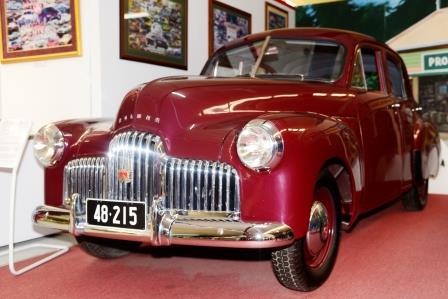
1948 FX Holden
From the museum we headed back to the wharf area. They have one street where all the buildings are from the 1880’s. It’s like stepping back in time, they even have a stage coach operating. We checked the paddle steamer departure times and then found a nice café for lunch. After lunch we bought tickets for the PS Canberra for our paddle steamer cruise.
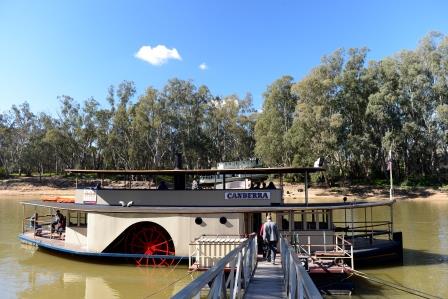
PS Canberra
Although the advent of the railways killed of the most of the paddle steamer trade some of them were still working up until the 1950’s bringing logs downstream from the river gum forests to the Echuca timber mills. In the peak of the trade there were about 200 steamers working the Murray and Darling Rivers. Without the system of weirs and locks that exist today the steamers only operated during the flood or high water season. In some years of drought the paddle steamers were isolated in the deeper river pools for several years until the river started flowing again.
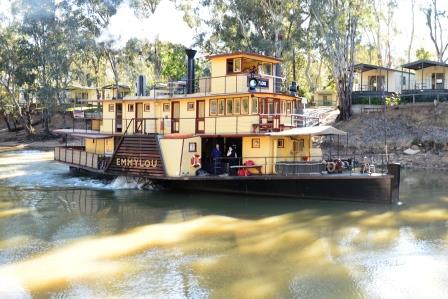
PS Emmy Lou
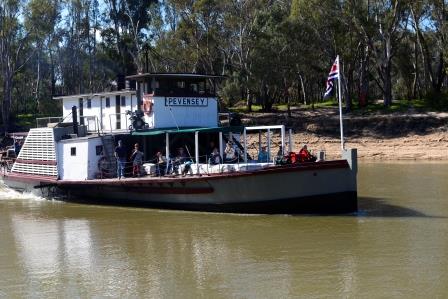
PS Pevensey
After the river cruise we spent some time exploring the wharf museum which gave insight to what life was like in the days of paddle steamers. For the most part the steamers pulled several barges that where loaded with wool or timber. Some of the barges carried up to 200 bales of wool and it was transported from sheep stations all the way up the Darling River. Food and other goods were transported on the upstream journeys.
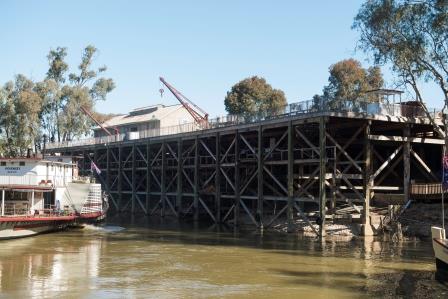
Echuca Wharf, there were multiple loading decks to match the height of the river
It was a very informative and busy day. Just to make things a little more interesting on the way back to camp I switched the GPS to short mode and it gave a route that was 12 kms shorter that the route we took in the morning. Once again we headed down the back dirt roads until we came to a road closed sign. It looked like vehicles had been using it so we decided to venture on. As it turned out there were only a couple of boggy areas and we were able to get around them with little trouble and we came out on to the main road past another road closed sign.


 Our Travels